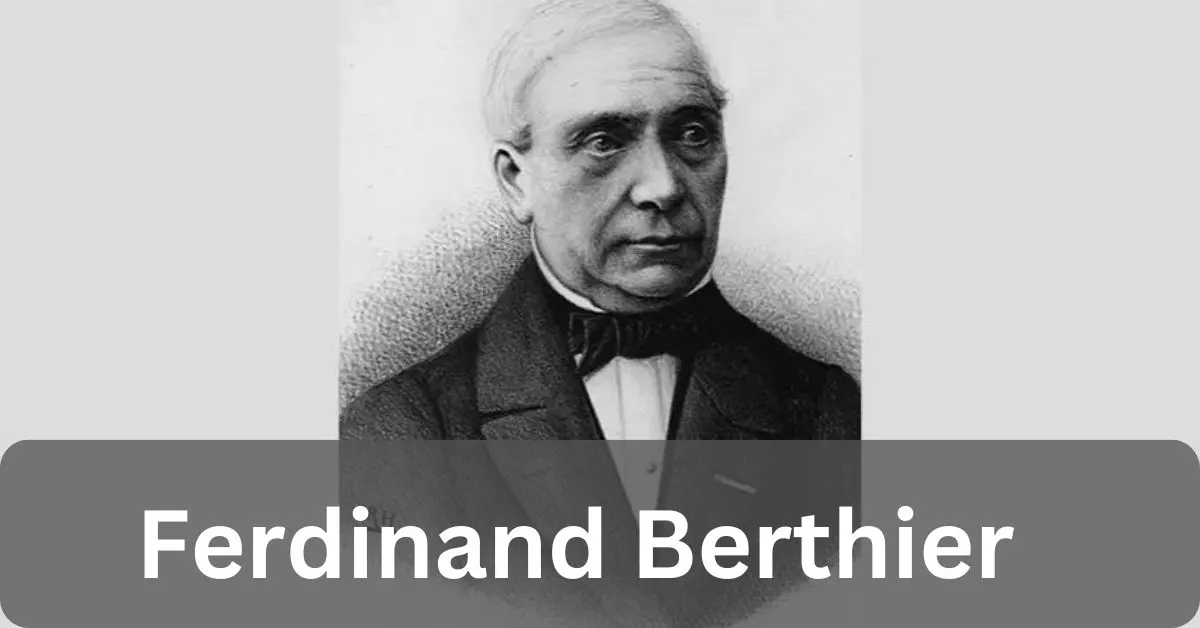

Unveiling the unsung hero of Deaf history, Ferdinand Berthier, whose remarkable journey from student to advocate reshaped the landscape of Deaf rights and culture.
Ferdinand Berthier, a deaf Frenchman born in the 19th century, emerged as a prominent advocate for Deaf identity and culture, pioneering initiatives such as silent banquets and founding the Central Society of the Deaf-Mute.
Join us on a journey to rediscover the legacy of Ferdinand Berthier, whose passion and perseverance paved the way for a more inclusive world for the Deaf community.
Early Years Of Ferdinand Berthier – Click For Essential Information!
Ferdinand Berthier’s story unfolds against the backdrop of early 19th-century France when societal perceptions of deaf individuals were often limited and prejudiced. Born into this world, Berthier’s journey commenced at the prestigious National Institute for the Deaf in Paris.
Initially, his path seemed destined for a modest life as a tradesman, a fate common for many deaf individuals of his time. However, fate had other plans for Berthier. As he immersed himself in his studies at the institute, his natural intelligence and keen intellect began to shine through.
Mentored by influential figures such as Laurent Clerc and Roch-Ambroise Auguste Bébian, Berthier’s trajectory took a transformative turn. He excelled in his academic pursuits and found his passion ignited by the burgeoning movement for Deaf rights and identity.
Driven by a desire to challenge societal norms and advocate for the rights of the Deaf community, Berthier emerged as a prominent figure in Deaf advocacy. His journey from a humble student to a trailblazing advocate mirrored the broader evolution of Deaf identity and culture during the 19th century.
The Rise Of An Advocate – Access The Details Instantly!

Ferdinand Berthier’s journey at the National Institute for the Deaf in Paris was remarkable. Within two decades of his enrollment as a student, Berthier rose to the prestigious position of senior professor at the institute.
This rapid ascension was a testament to Berthier’s exceptional intellect, dedication, and passion for advocating for the Deaf community.
Key to Berthier’s development was his influential mentors, including the renowned Laurent Clerc and Roch-Ambroise Auguste Bébian. Clerc, a pioneering figure in Deaf education, and Bébian, a staunch advocate for sign language and Deaf culture, played pivotal roles in shaping Berthier’s views and values.
Under their guidance, Berthier honed his academic skills and developed a deep-seated commitment to advancing the rights and recognition of Deaf individuals.
As Berthier assumed his role as a senior professor, his intellectual prowess and political acumen became evident. He used his position not only to educate but also to advocate for Deaf identity and culture.
Read: Understanding Phishing: What It Is and How to Stay Safe
The Significance Of Symbolism – Click Here For The Full Report!
Berthier’s legacy is symbolized by three distinctive name signs, each representing different facets of his life and achievements.
The first sign references his baldness, a physical trait that became synonymous with his identity. The second sign depicts a flat-handed O-circle near the ear, symbolizing his trademark French beret, a nod to his cultural identity.
Lastly, the third sign signifies his recognition by the French government, specifically the Legion of Honor, for his activism and advocacy for Deaf rights.
These name signs serve as a poignant reminder of Berthier’s multifaceted contributions to Deaf history. They encapsulate his characteristics and role as a pioneering advocate for Deaf identity and culture.
Through these signs, Berthier’s legacy continues to be honored and remembered, inspiring future generations to continue his work in advancing the rights and recognition of the Deaf community.
Advocacy In Action – Dive Into The Information Now!
Berthier’s advocacy extended to pioneering the concept of silent banquets, a groundbreaking initiative aimed at promoting Deaf culture and fostering inclusion.
These banquets, which Berthier initiated in 1834, were unique in that they invited both Deaf and hearing individuals to participate.
The purpose of these events was twofold: to raise awareness about Deaf culture and to advocate for Deaf linguistic rights and equal citizenship. By inviting hearing community members to participate, Berthier sought to bridge the gap between the Deaf and hearing worlds, promoting understanding and acceptance.
These silent banquets were a testament to Berthier’s innovative advocacy approach and commitment to creating a more inclusive society for Deaf individuals. Through these events, Berthier laid the foundation for future efforts to promote Deaf culture and advocate for the rights of the Deaf community.
The Architect Of Change – Uncover The Facts Effortlessly!

In 1837, Ferdinand Berthier founded the Central Society of the Deaf-Mute, a groundbreaking organization that represented the interests of the Deaf community on a global scale. This historic initiative marked a significant milestone in advancing Deaf rights and advocacy.
The Central Society of the Deaf-Mute was the first of its kind, dedicated to addressing the needs and concerns of Deaf individuals worldwide. It provided a platform for Deaf people to come together, share their experiences, and advocate for their rights.
Through this organization, Berthier sought to elevate the status of Deaf individuals in society and promote the recognition of Deaf culture and identity.
The Central Society of the Deaf-Mute played a crucial role in advocating for Deaf linguistic rights and equal citizenship, paving the way for future generations of Deaf advocates.
Berthier’s founding of the Central Society of the Deaf-Mute was a testament to his unwavering commitment to the Deaf community.
His visionary leadership and tireless advocacy efforts inspire Deaf individuals and advocates worldwide.
Berthier’s Written Legacy – Get The Full Picture In A Click!
Berthier’s advocacy extended beyond activism into literature, where he played a pivotal role in documenting the lives and teachings of crucial figures in Deaf education.
Through publications such as “History and Statistics of the education of deaf-mutes,” Berthier highlighted the significance of sign language in Deaf education.
In his writings, Berthier celebrated the linguistic abilities of figures like Roch-Ambroise Auguste Bébian, emphasizing their contributions to Deaf education. He praised Bébian for his clear and rational approach to teaching sign language, which he believed was essential for the practical education of Deaf students.
Berthier’s publications also critiqued other prominent figures in Deaf education, such as Sicard and Massieu, for their support of “methodical” signing, which adhered to spoken language conventions.
In contrast, Berthier lauded Laurent Clerc for using “natural” signing, which he believed was more effective in teaching Deaf students.
Legacy Endures – Learn More With One Click!

Despite Ferdinand Berthier’s passing in 1886, his legacy endures through his lasting contributions to the Deaf community.
Berthier’s advocacy, writings, and pioneering initiatives continue to shape the landscape of Deaf rights and acceptance as a beacon of hope for future generations.
Berthier’s work laid the foundation for recognizing Deaf culture and identity, advocating for Deaf linguistic rights and equal citizenship.
His efforts to bridge the gap between the Deaf and hearing worlds through initiatives like silent banquets and the Central Society of the Deaf-Mute have had a lasting impact on Deaf advocacy.
Read: Who is Sashleigha Hightower? Exploring Her Story and Accomplishments
Conclusion:
Ferdinand Berthier’s journey from student to advocate reshaped Deaf history, leaving a legacy of inclusivity and equality. Born in France in 1803, Berthier lost his hearing at a young age due to illness.
FAQs:
1. What were some of Ferdinand Berthier’s achievements?
Berthier rose from student to senior professor at the National Institute for the Deaf in Paris. He founded the Central Society of the Deaf-Mute and pioneered silent banquets to promote Deaf culture and rights.
2. What is Ferdinand Berthier’s legacy?
Berthier’s legacy includes his advocacy for Deaf rights, his writings documenting critical figures in Deaf education, and his founding of the Central Society of the Deaf-Mute, which continues to advocate for Deaf individuals today.
3. How did Ferdinand Berthier contribute to Deaf education?
Berthier wrote extensively on the importance of sign language in Deaf education, praising educators who used “natural” signing methods over “methodical” ones.
4. How did Ferdinand Berthier advocate for Deaf rights?
Berthier organized silent banquets to raise awareness about Deaf culture and rights, and he founded the Central Society of the Deaf-Mute to represent Deaf individuals’ interests globally.
Leave a Reply